Wedding day first aid: 5 unexpected scenarios a master of ceremonies solves invisibly

The best solutions on a wedding day are the ones nobody sees. As a master of ceremonies, I have seen plenty happen behind the scenes in more than 100 weddings. The couple usually knows nothing about it, and that is exactly how it should be.
Below are five scenarios that I experienced myself or am always prepared for, and how I handle them.
Scenario 1: the coach breaks down at the church
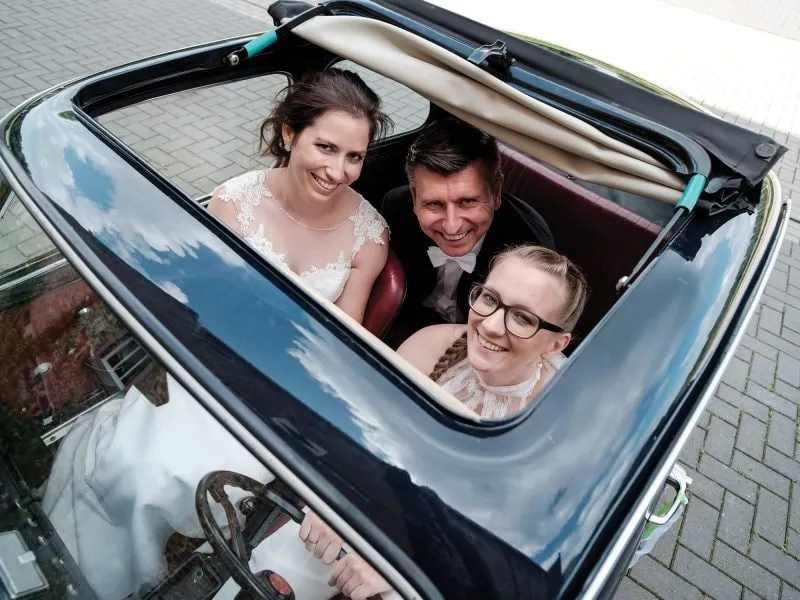
It may well be the most “disastrous” thing I have ever experienced behind the scenes. A modern coach broke down on arrival at the church. And after the service, that same coach had to leave again.
The advantage: I knew exactly when the service would end, and therefore how much time we had. While the ceremony was taking place inside, we arranged everything outside, so the coach was ready to go when the service was over.
The couple? They never noticed a thing. For them, the day simply carried on as planned.
Scenario 2: a heavy thunderstorm suddenly breaks
At one wedding, I suddenly and unexpectedly saw that a heavy thunderstorm was coming, while everything had been planned outdoors. At that point, every minute counts.
Behind the scenes, I quickly coordinated with the event venue, the chef and everyone else involved, and moved the programme from outside to inside. Everything was arranged just in time, and nobody noticed. For me, that is the heart of the job: making the day carefree.
My fixed routine: the day before the wedding, I always give the couple a call. I check the weather forecast and give advice, for example if it is going to be a very hot day.
Scenario 3: a supplier does not keep to the agreements
A supplier who is late or does not stick to what was agreed: it happens. My approach:
- Stay calm. Panic helps nobody, and the couple must not feel any of it.
- Inform the wedding planner, if there is one.
- Look for solutions together. I think along actively and proactively.
An honest side note: many people think a master of ceremonies manages the suppliers. That is really the wedding planner’s job. But I do have contacts who can arrange something in an emergency, and I use them when needed. The difference between both roles is explained in friend or professional master of ceremonies.
Scenario 4: a dress or suit tears
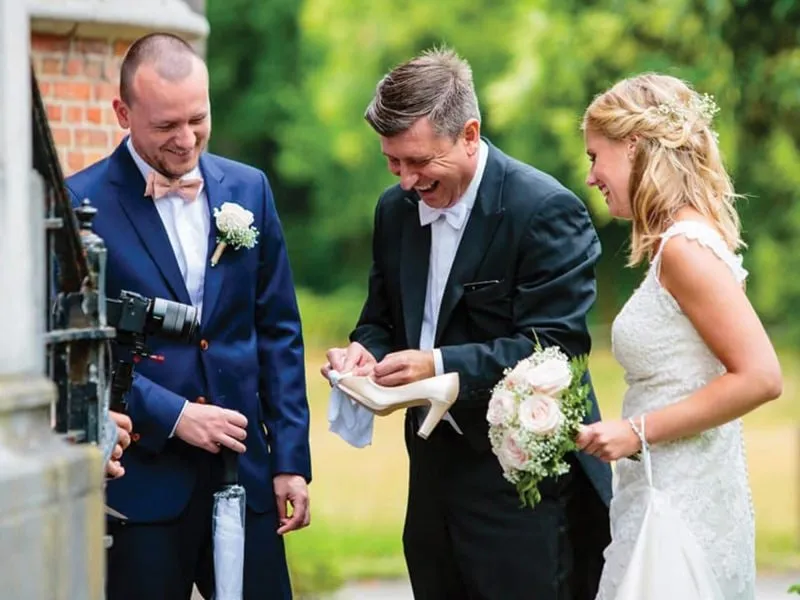
A seam that gives way, a hem that comes loose: on a day full of dancing, hugging and getting in and out of cars, it can happen. That is why my emergency kit contains a sewing kit, so it can be fixed quickly and discreetly.
Scenario 5: emotions or alcohol run high
A wedding day is long, and on a hot day things move faster than you think. Here I mainly work preventively:
- I advise the group. If it is a hot and long day, I recommend keeping an eye on the alcohol.
- I keep an eye on everything. After years of experience, I recognise behaviour that others overlook, and I can see in time when someone is getting close to the edge.
- I speak to people personally, calmly and discreetly, to switch to water or a soft drink for a while.
That way you avoid a situation instead of having to solve it afterwards.
What is in a master of ceremonies’ emergency kit?
My emergency kit comes along to every wedding:
- Umbrellas, for an unexpected shower
- A sewing kit, in case something tears
- Paper tissues, for the emotional moments (and there always are some)
- A phone full of contacts who can help in an emergency
The most important part is not in the kit but in the head: I can anticipate well what might happen, so I am always one step ahead.
In short
- A master of ceremonies solves problems behind the scenes, so the couple does not notice anything.
- Real examples: a coach breaking down at the church, a sudden thunderstorm that meant moving everything indoors.
- The day before: a call to the couple, a check of the weather forecast, advice.
- Managing suppliers is the wedding planner’s job; the master of ceremonies helps think and has emergency contacts.
- When emotions or alcohol run high: step in preventively and discreetly.
Want to know how a good timeline prevents things from getting that far? Read from rigid planning to natural flow. Or get in touch to discuss your day.
Frequently asked questions
- What does a master of ceremonies do when something goes wrong on the wedding day?
- He stays calm, quickly coordinates with the people involved such as the venue, kitchen and transport, and solves the problem behind the scenes. The goal is for the couple not to notice anything.
- What if it rains or storms on our wedding day?
- Eddy Kips checks the weather forecast the day before the wedding and always carries umbrellas. If a thunderstorm still breaks out unexpectedly, he arranges with the venue and the kitchen to move the programme indoors.
- What is in a master of ceremonies’ emergency kit?
- Eddy Kips carries umbrellas, a sewing kit in case something tears and paper tissues. He also has contacts who can help in an emergency.
- Does the master of ceremonies also handle problems with suppliers?
- Managing suppliers is primarily the wedding planner’s job. If a supplier does not keep to the agreements on the day itself, the master of ceremonies stays calm, informs the wedding planner and actively helps find a solution.
- What does a master of ceremonies do if guests drink too much?
- He works preventively: on a hot, long day he advises keeping an eye on alcohol, and he personally and discreetly speaks to anyone getting close to the edge to switch to water or a soft drink for a while.